
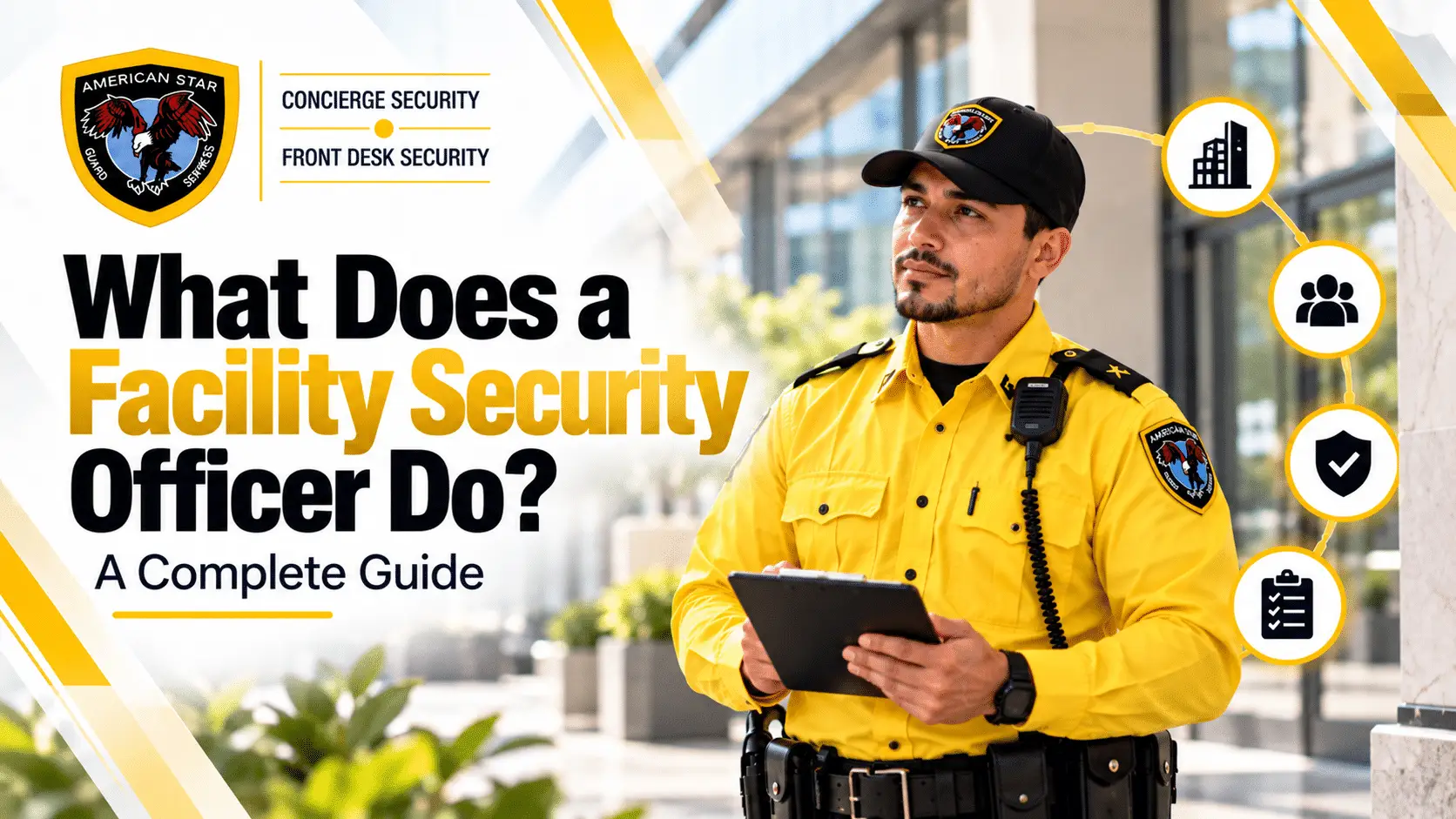
Facility security is an important part of keeping businesses, employees, visitors, and property safe. From manufacturing plants and office buildings to healthcare facilities and commercial properties, organizations need trained professionals who can identify risks and respond to security concerns.
A facility security officer helps maintain a safe and controlled environment by monitoring the property, managing access, responding to incidents, documenting activities, and following established security procedures.
The exact responsibilities can vary depending on the facility, but the overall goal remains the same: protect people, property, information, and daily operations.
What Is a Facility Security Officer?
A Facility Security Officer, often called an FSO, is a security professional responsible for overseeing security activities at a specific facility.
Their work can involve much more than simply watching a building. Depending on the assignment, an officer may monitor surveillance systems, control access points, conduct patrols, respond to emergencies, maintain security records, and communicate with facility management.
The role requires alertness, professionalism, communication skills, and the ability to make appropriate decisions when unexpected situations occur.
What Are the Duties of a Facility Security Officer?
The responsibilities of a facility security officer depend on the type and size of the property. However, several duties are common across many facilities.
1. Monitor and Protect the Facility
One of the primary responsibilities is maintaining a safe environment for employees, visitors, vendors, and other authorized individuals.
Security officers may monitor entrances, exits, restricted areas, parking areas, and other locations where security concerns could occur.
They also remain alert for suspicious behavior, safety hazards, unauthorized activity, or potential threats.
2. Manage Access Control
Access control is an important part of facility security.
Officers may verify identification, monitor visitors, maintain access records, issue visitor credentials, and ensure that only authorized individuals enter restricted areas.
Effective access control helps businesses protect employees, equipment, sensitive areas, and valuable property.
3. Conduct Regular Patrols
Patrolling allows security officers to identify potential problems before they become serious incidents.
Depending on the facility, patrols may include:
- Interior building areas
- Exterior grounds
- Parking lots
- Loading areas
- Restricted zones
- Equipment areas
- Emergency exits
During patrols, officers may look for unauthorized activity, damaged doors, safety hazards, suspicious individuals, or other conditions that require attention.
4. Monitor Security Systems
Modern facilities often use cameras, alarms, access control systems, and other security technologies.
Security officers may monitor CCTV systems, respond to alarms, review security footage, and report unusual activity.
Technology provides valuable information, but trained personnel are still important for understanding what is happening and deciding what response may be appropriate.
5. Respond to Emergencies
Security officers may be among the first people to respond when an incident occurs at a facility.
Depending on their training and the site’s procedures, they may respond to situations involving:
- Fire alarms
- Medical emergencies
- Unauthorized access
- Suspicious activity
- Property damage
- Workplace disturbances
- Safety hazards
Officers may also contact police, fire departments, emergency medical services, or facility management when additional assistance is required.
6. Maintain Security Reports and Records
Documentation is another important part of security officer responsibilities.
Officers may record visitor activity, patrols, incidents, access events, alarms, and other security-related information.
Accurate reports help facility managers understand what happened and can provide useful information for future investigations, audits, or security assessments.
Clear documentation also helps identify recurring issues that may require changes to security procedures.
What Skills Does a Facility Security Officer Need?
Being an effective security officer requires more than physical presence. Officers need a combination of practical, technical, and interpersonal skills.
- Communication Skills
Security officers regularly communicate with employees, visitors, managers, emergency responders, and other security personnel. Clear and professional communication helps prevent misunderstandings and supports effective incident response.
- Observation Skills
Strong observation skills allow officers to recognize unusual behavior, security vulnerabilities, and changes in the environment.
- Problem-Solving Skills
Security situations do not always follow a predictable pattern. Officers need to assess situations and follow established procedures while making appropriate decisions.
- De-Escalation Skills
Security professionals may encounter upset, confused, or aggressive individuals. The ability to remain calm and use professional communication can help reduce tension.
- Technology Skills
Facility security increasingly involves surveillance cameras, access control systems, alarms, radios, and digital reporting tools. Officers should understand the systems required for their assignment.
Training for Facility Security Officers
Training requirements vary depending on the employer, facility, position, and state.
Many security positions require licensing, background screening, and specific training before an officer can begin working. Additional training may be required for specialized environments or responsibilities.
Training may cover areas such as:
- Patrol procedures
- Emergency response
- Access control
- Report writing
- Fire safety
- First aid and CPR
- Communication
- De-escalation
- Security technology
- Site-specific procedures
For positions involving sensitive facilities or government contracts, additional clearance or specialized requirements may apply.
Where Do Facility Security Officers Work?
Facility security officers can work in many different environments. Each facility has its own security requirements and potential risks.
Common locations include:
- Office buildings
- Manufacturing facilities
- Industrial sites
- Healthcare facilities
- Educational institutions
- Government buildings
- Financial facilities
- Warehouses
- Research facilities
- Commercial properties
The officer’s responsibilities are usually adapted to the specific needs of the facility.
For example, a manufacturing facility may require strict access control and perimeter patrols, while an office building may place greater emphasis on visitor management, employee safety, and after-hours monitoring.
Why Professional Facility Security Matters
Security risks can affect business operations, employee safety, property, and reputation. Having trained security professionals on-site can provide an additional layer of protection.
A professional security officer can help identify potential problems, enforce facility procedures, respond to incidents, and communicate important information to management.
For businesses looking for security guards Las Vegas or security officers Las Vegas, choosing a qualified security provider is an important part of developing an effective protection strategy.
Facility Security With American Star Guard
Every facility has different security needs. A successful security program should consider the property’s layout, operating hours, access points, employees, visitors, equipment, previous incidents, and potential risks.
American Star Guard provides professional security solutions designed to help businesses protect people, property, and operations.
Our security professionals can support facilities through services such as access control, patrols, surveillance monitoring, incident response, and other security responsibilities based on the needs of the property.
For businesses seeking licensed security officers Las Vegas, working with an experienced security provider can help create a more organized and reliable security environment.
Conclusion
A facility security officer plays an important role in protecting people and property. Their responsibilities can include access control, patrols, surveillance monitoring, emergency response, incident reporting, and communication with management and emergency services.
The role requires professionalism, strong observation skills, communication, problem-solving, and appropriate training.
Whether the facility is a commercial building, manufacturing site, healthcare property, or industrial location, trained security personnel can provide valuable protection and help organizations respond more effectively to security concerns.
For businesses in Las Vegas, American Star Guard can provide professional security services based on the unique requirements of the facility.
Frequently Asked Questions
1. What is a facility security officer?
A facility security officer is a trained security professional responsible for helping protect a specific property, its people, assets, and operations.
2. What are the main duties of a facility security officer?
Common duties include access control, property patrols, surveillance monitoring, emergency response, incident reporting, visitor management, and enforcing site security procedures.
3. What skills should a facility security officer have?
Important skills include communication, observation, problem-solving, de-escalation, attention to detail, and the ability to use security technology.
4. Do facility security officers need training?
Yes. Training requirements depend on the position and location. Security officers may need licensing, background checks, security training, and additional site-specific training.
5. Where can facility security officers work?
They may work in offices, manufacturing plants, industrial facilities, healthcare properties, schools, warehouses, government buildings, financial institutions, and other commercial facilities.
6. How can a facility security officer help a business?
A security officer can help deter unauthorized activity, monitor the property, control access, respond to incidents, document security events, and support a safer workplace.
7. Does the American Star Guard provide facility security services?
Yes. American Star Guard provides professional security solutions for businesses and facilities, with services designed around each property’s specific security requirements.