
Shoplifting used to mean a teenager pocketing a candy bar. Today it often looks like two or three people clearing a shelf of razors in under a minute, then walking out to a car with the engine running.
If you own a store or manage a shopping center in Las Vegas, you have probably seen some version of this already. This guide explains how retail security works in practice: what guards do on a shift, when you need armed or unarmed officers and how to prepare for the holiday rush.
Why retail theft is a growing problem for Las Vegas businesses
The numbers are hard to ignore. The National Retail Federation’s 2024 Impact of Retail Theft & Violence report found that the average number of shoplifting incidents rose 93% in 2023 compared with 2019. Dollar losses from those incidents rose 90% over the same period.
The retailers in that survey averaged 177 shoplifting incidents per day. 62% said groups of two or three people stealing together had become a bigger worry than the year before. 73% said shoplifters were acting more violent and aggressive.
Las Vegas adds its own pressure. Stores here serve locals and tourists at the same time. Many stay open late. Parking lots stay busy well past midnight. A store on Las Vegas Boulevard sees more unfamiliar faces in a week than a small-town shop sees in a year, which makes it easier for a thief to blend in.
Theft also comes from inside. Employee theft, return fraud and register skimming drain money quietly. None of it looks dramatic on camera, but it shows up in your year-end inventory count.
How retail security guards reduce theft and loss
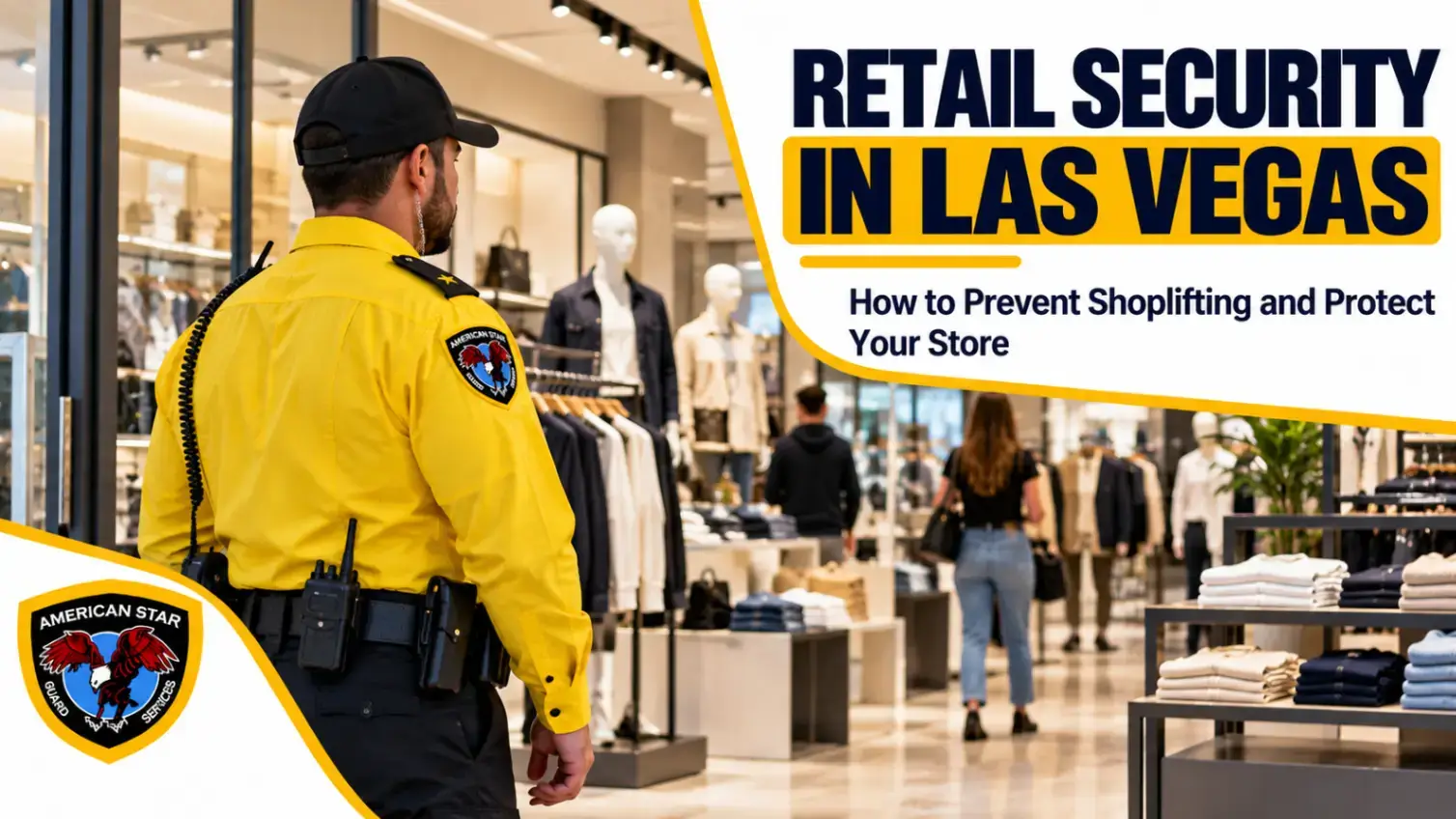
Most shoplifters are opportunists. They pick the store where nobody seems to be paying attention. A uniformed guard near the entrance changes that math before anything leaves the shelf. In the NRF report, adding uniformed security officers was one of the main steps retailers took as theft climbed.
Here is what a good retail guard does during a shift:
- Greets customers at the door. A friendly “good afternoon” tells a would-be thief they have been noticed.
- Walks the high-risk aisles such as cosmetics, liquor, electronics and over-the-counter medicine.
- Watches fitting rooms for anyone who walks in with six items and comes out with two.
- Steps in early when a customer gets angry, so cashiers are not left to handle it alone.
- Writes an incident report with the time, a description and a camera reference that police or your insurer can use.
Take a common case. A sporting goods store keeps losing one brand of sneakers every weekend. Posting a guard near that display from 3 p.m. to close, the store’s busiest window, often pushes thieves toward an easier target down the road.
Guards protect your staff as well. Cashiers who feel safe tend to stay longer. Lower turnover saves you real money on hiring and training. That is why our retail and shopping center security plans start with where your people feel most exposed.
Security tips for shopping malls and strip centers
A shopping center has problems a single store never sees. You share parking, walkways and back alleys with every tenant. One weak spot affects everyone. Here are the four issues we see most often in Las Vegas centers and one practical fix for each.
Parking lot theft and car break-ins
A dark corner of the lot at 9 p.m. is where most car break-ins happen. Thieves look for shopping bags left on seats.
Tip: Use parking lot mobile patrol at random times during evening hours. A marked vehicle that shows up at 7:40 one night and 9:15 the next is much harder to plan around than a fixed schedule. Pair it with brighter lighting in the far rows.
Loitering and trespassing near storefronts
Groups that hang around entrances make customers walk past your store instead of into it. Tenants notice and complain fast.
Tip: Post clear no-loitering signs and give guards written rules for when and how to ask people to move along. Consistent, polite enforcement works better than a confrontation once a week.
After-hours break-ins
Strip centers are most exposed between closing and opening. Rear doors and loading areas are common entry points because nobody is watching them.
Tip: Ask for security guard patrol services that include door checks. A guard who physically pulls on every rear door overnight will find the one a tenant forgot to lock.
Aggressive customers and disputes
A refund argument can turn into a shouting match in seconds. Staff are not trained for that moment.
Tip: Give every tenant a direct number to the on-duty guard. When the guard arrives within two or three minutes, most disputes calm down before anyone gets hurt.
A quick note for shoppers reading this: park under a light, put bags in the trunk before you walk back into another store and keep your phone out of reach of open car windows. Small habits stop most parking lot theft.
Armed vs unarmed security guards for retail: which do you need?
Most stores do well with unarmed security guards. They cost less, they fit a friendly shopping environment and their main job is prevention and customer service. Armed guards make sense when the value of what you protect, or the risk to your staff, is high.
| Guard type | Best for | Retail examples |
|---|---|---|
| Unarmed | Deterrence, customer service, fitting rooms, parking lots | Clothing stores, grocery stores, pharmacies, strip centers |
| Armed | High-value goods, cash handling, past violent incidents | Jewelry stores, electronics stores, check-cashing shops, cannabis dispensaries |
Here is a simple way to decide. Ask yourself what happens if someone gets past your guard. If the answer is “we lose a few shirts,” unarmed coverage is enough. If the answer is “we lose $40,000 in watches” or “a cashier could get hurt during a cash drop,” talk to a provider about armed coverage.
Many centers use both. An unarmed officer handles the floor during the day, then an armed officer covers closing and the bank deposit run. You can compare both options on our armed and unarmed security officers page or read more about the benefits of armed security guards in Las Vegas.
Not sure what your store needs? Request a free retail security assessment and we will walk your site with you, or call (702) 895-7399.
Retail security solutions that work with guards
A guard works best as one part of a plan. These four retail security solutions make every hour of guard coverage go further.
Fix your sight lines. Tall shelves near the door create blind spots. Lower the end caps near the exit and move small, expensive items closer to the register. If a cashier can see the aisle, a thief feels watched.
Connect cameras to a person. Cameras record theft. They rarely stop it. A camera system becomes far more useful when a guard checks the monitors between floor rounds and can walk to an aisle while something is happening.
Lock down the back of the store. A lot of loss happens through stockrooms and loading docks, not the front door. Access control for stockrooms with key cards and a delivery log shows exactly who went in and when. That record matters when an employee theft question comes up.
Train staff to observe and report. Employees should know how to offer help to a suspicious shopper (“Can I find a size for you?”) and when to call the guard. They should never chase or grab anyone. Chasing a shoplifter into a parking lot has led to serious injuries and lawsuits for retailers across the country. Your guard and the police handle the rest.
Holiday season retail security checklist
The stretch from Black Friday to New Year’s brings the biggest crowds and the most theft of the year. Book extra coverage by early November, because security companies fill their holiday schedules fast. Use this checklist to plan:
- Add guards on peak days. Black Friday, the weekend before Christmas and December 26 returns need more coverage than a normal Tuesday.
- Patrol the parking lot at closing. Staff walking to their cars at 10 p.m. with tips or bags are easy targets. A guard escort takes two minutes.
- Protect cash and deposits. Vary the time of your bank run and send a guard with whoever carries the deposit.
- Plan crowd control at the entrance. Decide in advance where lines form and who manages them. A doorbuster crowd with no plan is how people get hurt.
- Brief seasonal workers. Temporary staff do not know your theft hot spots. Spend 10 minutes on day one showing them where problems happen and how to reach the guard.
- Watch the returns desk. Return fraud spikes after the holidays. Ask for a receipt or ID on high-value returns and keep a guard nearby during the January rush.
How to choose retail security services in Las Vegas
The cheapest quote is rarely the best value. A guard who stands by the door scrolling a phone costs you money and protects nothing. Ask these questions before you sign:
- Is the company licensed by the Nevada PILB? Every security company in Nevada needs a license from the Private Investigators Licensing Board. Ask for the number and check it yourself. Our guide shows how to verify a Nevada PILB license in a few minutes.
- Are guards trained for retail? Retail work is mostly customer service. Ask how officers are trained in de-escalation and what they are told to do when they see theft.
- How do you report incidents? Look for real-time digital reports with photos and timestamps. You should not have to wait until Monday to find out what happened on Saturday night.
- Will I get the same guards each week? A regular officer learns your repeat offenders, your staff and your problem aisles. A new face every shift starts from zero.
- Can coverage change with the season? You may need one guard in March and three in December. Your contract should allow that without a fight.
FAQs about retail security guards
How much does it cost to hire a security guard for a retail store?
Cost depends on whether you need armed or unarmed officers, how many hours you need and how long the contract runs. Unarmed daytime coverage costs less than armed overnight coverage. The best way to get a real number is a site walk. This guide on how to plan a commercial security budget can help you prepare.
Can security guards stop or detain shoplifters in Nevada?
Nevada law (NRS 597.850) gives merchants and their agents limited rights to detain someone they reasonably believe stole merchandise. The rules on time, manner and force are strict. Most retail guards are trained to observe, report and call police instead of using force. Check with your attorney before setting a detention policy.
Do I need armed security for my store?
Most stores do not. Unarmed guards handle deterrence and customer issues well. Armed guards fit stores with high-value goods, large cash handling or a history of violent incidents. Jewelry stores, electronics stores and dispensaries are common examples. A security assessment will show which risk level fits your store.
Is mobile patrol enough for a shopping center?
For many smaller strip centers, yes. Random mobile patrols cover parking lots, rear doors and after-hours checks at a lower cost than a full-time guard. Larger centers with heavy foot traffic usually need an on-site officer during open hours, with mobile patrol covering the overnight shift.
When should I add security for the holidays?
Book holiday coverage by early November. Security companies fill their schedules quickly before Black Friday. Plan extra guards for peak shopping weekends, closing-time parking lot patrols and the January returns rush. Starting early also gives your new guards time to learn your store before the crowds arrive.
Protect your store before the next busy season
Retail theft in Las Vegas is more organized and more aggressive than it was a few years ago. The stores that lose the least combine visible guards, smart layout and staff who know when to call for help.
American Star Guard provides licensed retail and shopping center security across Las Vegas and Southern Nevada. Request a free security assessment or call (702) 895-7399 to get a plan built around your store.
Sources
- NRF: Shoplifting figures see sharp increase on pre-Covid levels (FashionUnited, reporting the NRF 2024 Impact of Retail Theft & Violence study)
- Uniformed security officers among retailer responses (FashionUnited India)